
Cycling Galway: bikes, e-bikes and getting them home
A bike can make a short Galway commute much more predictable. Try your route in daylight, plan for rain and budget for a strong lock, lights and servicing.
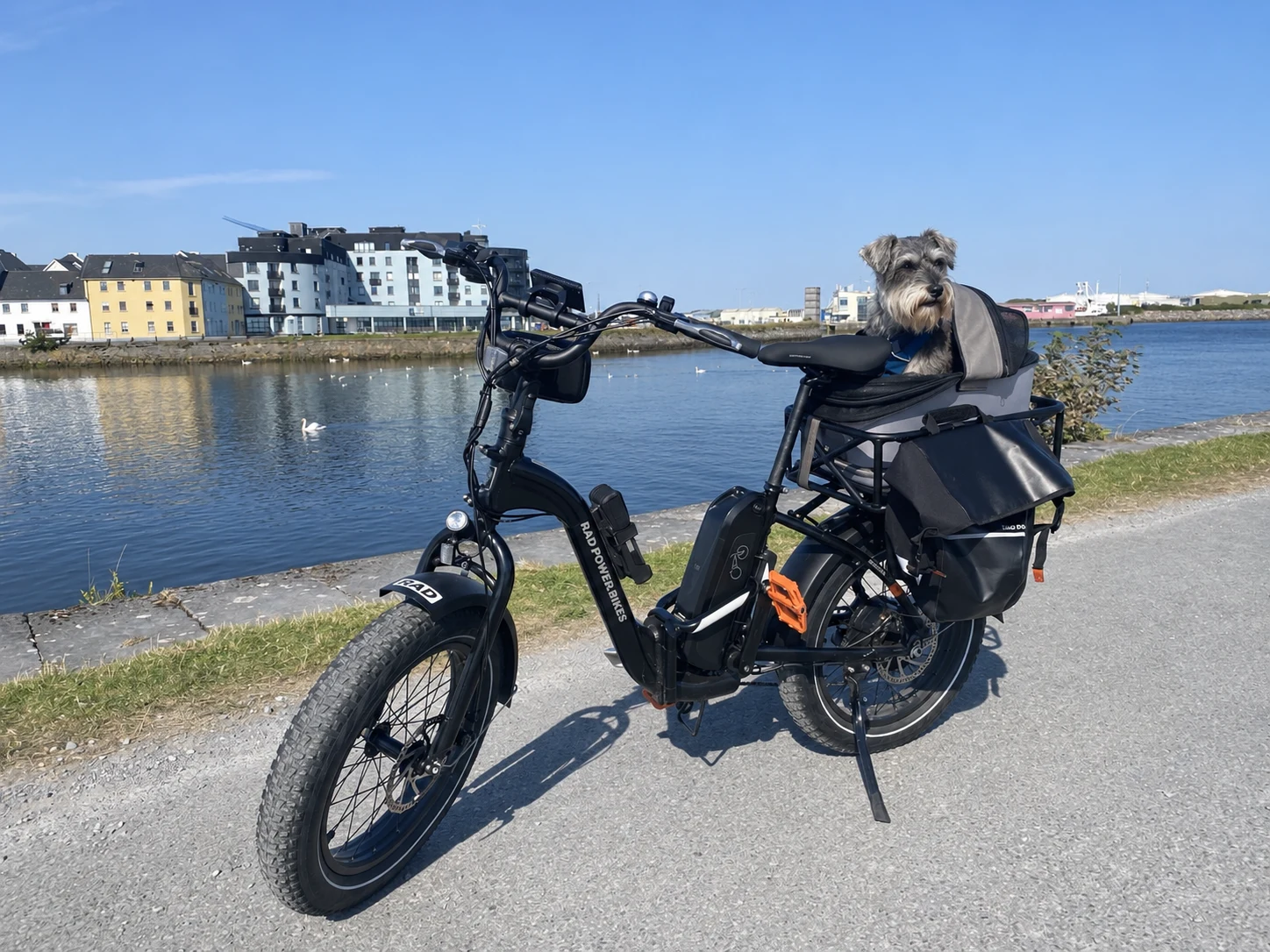
Close cycling advice
Start with a shop that can maintain your bike
An Mheitheal Rothar
Community bike workshop offering refurbished and new bikes, repairs and maintenance classes. The bike shop is at the Old Handball Alley, Earls Island, University Road; its recycling centre is in Westside Enterprise Park.
Shop, workshop and contact detailsWest Ireland Cycling / Bike Shop
A Claddagh shop for bikes, rentals and repairs. Ask about fit, a service and the total cost of a lock and lights before buying.
Find West Ireland CyclingFor a used bike, check brakes, tyres, gears, frame condition and proof of ownership. Record its serial number and keep a photo. Lock the frame to a proper stand; a cable alone is a weak main lock. Ask a shop whether it services your particular e-bike motor and battery before ordering online.
Everyday road habits
Ride on the left, obey signals, signal turns and watch for opening car doors. Ordinary footpaths and pedestrian-only streets are not cycle lanes. On signed shared paths, slow down and give pedestrians space. Use front and rear lights in darkness; a helmet and reflective clothing are strongly recommended for bicycles. Check the council’s cycle-parking and repair-station information.
E-bike is not the same as e-moped
A standard bicycle-class e-bike is pedal-assisted, with a maximum continuous motor rating of 250W; assistance cuts out when you stop pedalling or reach 25 km/h. Bicycle rules apply, with no driving licence, motor tax or compulsory motor insurance. More powerful or throttle-driven models may be e-mopeds with different requirements. Check the legal classification, not just the seller’s “e-bike” label.
Official e-bike and e-moped classificationsE-scooters: different rules
Current RSA rules require riders to be 18+ and wear a securely fastened helmet and high-vis clothing covering the front and back of the torso. A compliant standing scooter is limited to 20 km/h, 400W continuous power and 25kg including the battery. No passengers, seats, goods, phone use, footpath riding or motorways. It needs brakes, lights, reflectors and an audible warning device. A compliant low-power scooter needs no driving licence, motor tax, registration or insurance.
New from 18 November 2026: fixed-charge notices for listed e-scooter offences increased to €100, including helmet and high-vis offences.
Check the current RSA e-scooter rulesCan it come inside—or on the train?
Ask before buying: accommodation, campuses, workplaces and venues may restrict indoor storage or charging of e-bikes and scooters. Road legality does not guarantee indoor permission. Use the correct charger and follow the manufacturer’s charging instructions; do not block an escape route.
- E-scooters are not permitted on Irish Rail services. Folding one does not make it a bicycle.
- E-bikes are outside the public-transport e-scooter ban, but normal bicycle-carriage rules still apply.
- InterCity: reserve a bicycle space in advance. Check rack dimensions before travelling with a bulky cargo or fat-tyre bike.
- DART and Commuter: full-size bikes are off-peak and capacity-dependent; excluded Monday–Friday 07:00–10:00 and 16:00–19:00. Folded, covered bikes have separate conditions.
Rules and shop sources checked 29 November 2026. Confirm carriage, storage and service availability before travelling or buying.
Next sectionDriving and insurance →